DIY Deck Building Guide: Helpful Tips for the Motivated Homeowner
The DIY Deck Building Guide provides useful information for homeowners seeking to improve their outdoor entertainment spaces. It highlights the significance of material selection, location, and design. Each stage of the building process is necessary for producing a durable and attractive deck. Yet, many fail to recognize typical obstacles that may emerge during construction. Understanding these challenges can make a significant difference in the overall success of the project. What factors should homeowners evaluate before starting?
Selecting the Ideal Spot for Your Deck
When selecting the perfect position for a deck, which factors deserve attention? To begin with, the solar exposure plays an critical role. A south-facing position can provide ample sunlight, great for leisure, while a north-facing position might provide greater shade. Next, examining the ground is vital; a level surface streamlines the building process and boosts durability. Closeness to the home is another key consideration, as it promotes easy access and regular use. Furthermore, regional zoning regulations and boundary lines must be examined to ensure adherence.
Landscape features, such as plants and trees, can provide privacy and aesthetic appeal but may also demand upkeep. Lastly, taking into account the deck's intended use—whether for dining, entertaining, or relaxing—will influence its placement. By carefully examining these factors, homeowners can choose a location that maximizes enjoyment and functionality.
How to Build an Effective Deck Design Plan
A comprehensive deck design plan is crucial for guaranteeing that the completed structure fulfills both functional and decorative purposes. Residents should commence by examining their personal requirements, such as the intended purposes of the deck—whether for entertaining, relaxation, or outdoor dining. It's necessary to think about the proportions and form of the deck in relation to the existing area, guaranteeing that it enhances the established architectural style and natural environment.
Subsequently, homebuilders should draft a floor plan that integrates elements like lounge areas, handrails, and embedded planters. This blueprint should emphasize accessibility and flow, permitting effortless navigation. Furthermore, homebuilders should consider adherence to municipal codes and regulations.
In addition,integrating visual features such as color palettes, building materials, and illumination will improve the overall appearance. By carefully combining practicality with visual elements, a well-rounded deck layout plan can greatly elevate exterior living experiences.
Fundamental Materials for Deck Building
Choosing the right material options is a critical step in the deck building process, after the detailed design plan established earlier. Property owners must explore numerous options, including composite, wood, and plastic materials. Pressure-treated wood continues to be a popular choice due to its long-lasting nature and cost-effectiveness. Nevertheless, it demands consistent care to prevent decay.
Composite decking presents an easy-care solution, blending wood fibers with plastic, though it may come at a higher initial cost. For individuals who prefer a more natural appearance, natural hardwoods including teak or ipe provide exceptional longevity and beauty yet demand attentive care and proper treatment.
Beyond decking boards, key materials consist of sturdy posts, beams, and joists, which make up the deck's structural foundation. Fasteners, such as screws and brackets, should be chosen based on material compatibility to guarantee stability. Finally, railings and balusters enhance safety while adding style to the deck's design.
Deck Installation: Step-by-Step Instructions
During the process of building a deck, having a clear grasp of the needed materials is vital to achieving success. A clear step-by-step approach will guide individuals through each phase of construction, ensuring a solid and safe structure. Furthermore, safety measures should be given top priority to safeguard all individuals participating in the project.
What You'll Need
Building a deck requires thoughtful evaluation of the materials needed to achieve longevity and visual appeal. Homebuilders should start by choosing high-quality lumber, such as cedar, pressure-treated wood, or composite materials, which deliver protection against rot and pests. Hardware components, including brackets and galvanized screws, are essential for long-term strength. A protective stain or sealant will shield the lumber from water and sun exposure, extending its lifespan. Furthermore, builders will need support posts and concrete footings, ensuring a solid foundation. Protective gear, including gloves and goggles, is essential for ensuring personal safety throughout the project. To complete the project, tools such as a drill, circular saw, and level will facilitate the building process, making it faster and more accurate.
The Step-by-Step Method
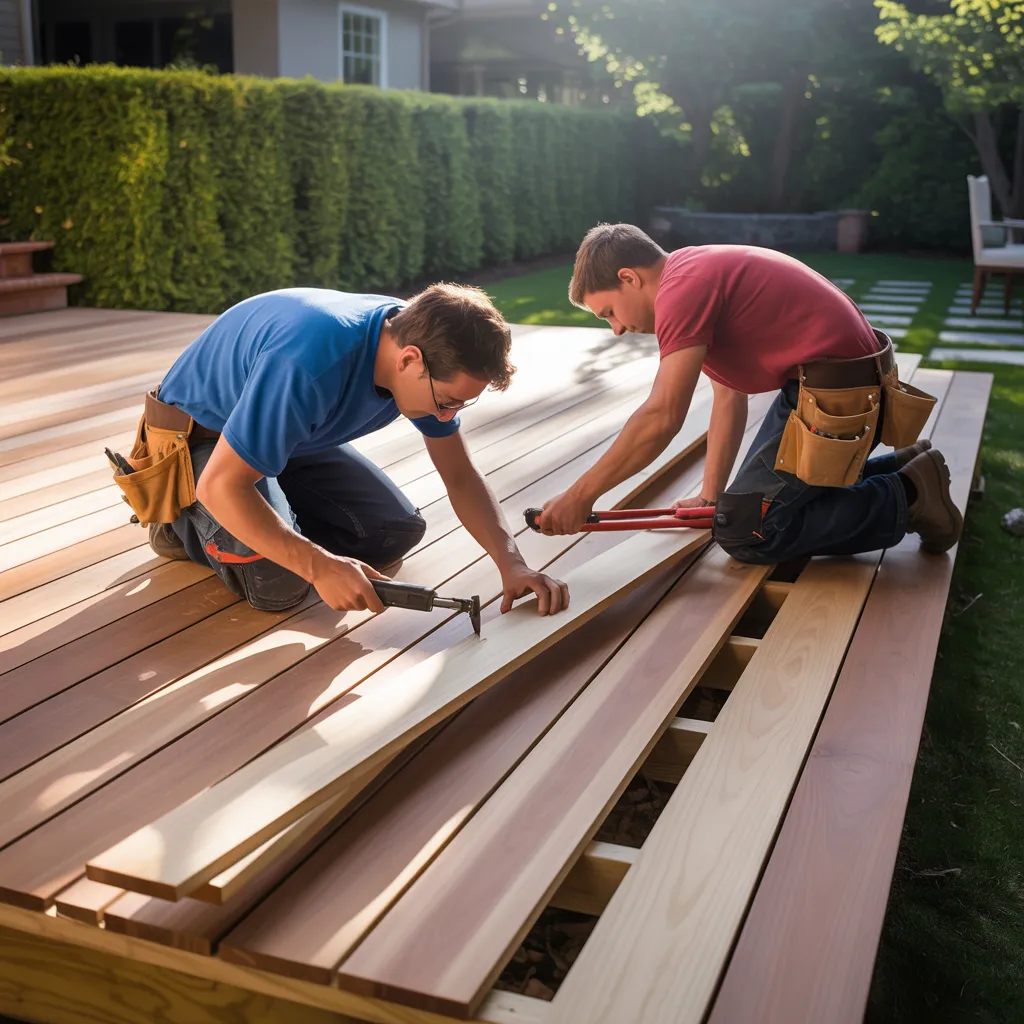
After compiling all required supplies, the subsequent stage entails carrying out an organized process for deck construction. The workflow initiates with establishing the boundaries by means of stakes and string to mark the deck's boundaries. After that, the footings are dug and concrete is applied to provide a sturdy base. Upon curing of the footings, the copyright board is attached to the house. Following this, the framing is built, incorporating joists positioned at equal intervals for structural integrity. The decking boards are then installed at right angles to the joists, fastened firmly. Railing posts are installed at designated locations, followed by the railing structure for safety and aesthetic appeal. Lastly, any concluding details, such as the application of stain or sealant, are applied to improve longevity and aesthetics.
Essential Safety Precautions
Before starting on deck construction, it is vital to make safety a priority to prevent accidents and injuries. Homeowners need to arm themselves with proper personal protective equipment (PPE), including protective goggles, gloves, and durable footwear. Furthermore, making the work area secure is essential; this may include placing barriers to prevent children and pets from entering the construction zone. Proper ladder usage is essential, along with confirming it is steady and correctly positioned. Homeowners need to stay mindful of their surroundings, particularly nearby overhead power lines. Additionally, keeping tools organized and in good condition can prevent mishaps. Finally, understanding the materials and their handling requirements will enhance safety throughout the deck building process, leading to a successful and secure outcome.
What Should You Avoid When Building Your Deck?
Avoiding common pitfalls is vital for a well-executed deck-building endeavor. One major mistake is neglecting to check local building codes and zoning regulations, which can lead to costly fines or required modifications. Furthermore, neglecting to account for adequate drainage can result in moisture buildup that compromises the deck and nearby areas. A frequent mistake involves selecting substandard materials; this can weaken the deck's overall strength and longevity.
Poor support remains another key problem; exceeding the deck's load capacity or skimping on joists can result in significant safety risks. Homeowners often overlook the importance of precise measurements, leading to uneven surfaces or components that are not properly aligned. In the end, hastening the construction process can produce shortcuts that compromise the overall quality. When homeowners take care to avoid these pitfalls, they can secure a safer and more resilient deck that elevates their outdoor environment.
How to Keep Your Deck in Great Shape for Years to Come
Preserving a deck demands a systematic approach to guarantee its longevity. Establishing a scheduled cleaning plan and performing periodic inspections can greatly extend the service life of the surface. These steps work to uncovering potential concerns in a timely manner and keep the deck in ideal condition.
Standard Cleaning Schedule
A consistent cleaning regimen is crucial for maintaining the condition and look of a deck over time. Property owners should make an effort to clean their decks at least two times a year, ideally in the spring and fall. This schedule helps clear away dirt, debris, and mold that can collect and lead to deterioration. Using a broom or leaf blower to remove loose debris is a easy first step. For more intensive cleaning, a combination of water and mild detergent can be used with a soft-bristle brush, followed by careful rinsing. Special attention should be given to areas around furniture and railings, where accumulation is more likely. Regular thorough guide cleaning not only improves the deck's appearance but also extends its lifespan considerably.
Tips for Seasonal Inspections
After establishing a routine cleaning regimen, homeowners should prioritize routine seasonal assessments to confirm the deck remains in ideal condition. As spring arrives, it is important to look for the effects of winter wear, which may include loose boards and cracked railings. Summer inspections focus on examining the structural soundness of the wood and verifying that fasteners are properly secured. In autumn, homeowners should clear debris while checking for mold or mildew growth, which tends to flourish in moist environments. Finally, winter inspections should assess snow accumulation and ice buildup, since these elements can place stress on the structure. Applying sealants and stains on a routine basis provides additional protection from weather conditions. By adhering to these seasonal recommendations, homeowners are able to maximize the longevity of their deck while preserving its visual charm.

Frequently Asked Questions
Do I Need a Building Permit for a Deck?
Whether a permit is required for building a deck varies based on local regulations. Generally, homeowners should contact their city or county building department to identify specific requirements and ensure compliance with zoning laws and safety standards.
How Do I Find the Right Contractor for My Deck Project?
To select the best contractor for a deck, homeowners should research qualifications, evaluate references, review estimates, confirm proper licensing, and consider interpersonal skills. Trustworthiness and experience in deck building are vital for a productive project.
What Is the Optimal Season for Deck Building?
Early fall and spring are regarded as the ideal seasons for deck construction. Low humidity and mild temperatures promote efficient work, while avoiding extreme weather conditions ensures proper material adhesion and strengthens the overall durability of the finished structure.
Can I Build a Deck on a Slope?
Indeed, a deck can be constructed on a slope. Even so, thorough planning and solid structural support are critical to ensure safety and stability. Strategies like post-and-beam framing or terracing may be required for successful outcomes.
How Can I Budget for My Deck Project?
To budget for a deck project, it is important to consider labor, materials, permits, tools, and unanticipated expenses. Establishing a comprehensive estimate and reserving a contingency budget will ensure costs are managed efficiently during the construction process.